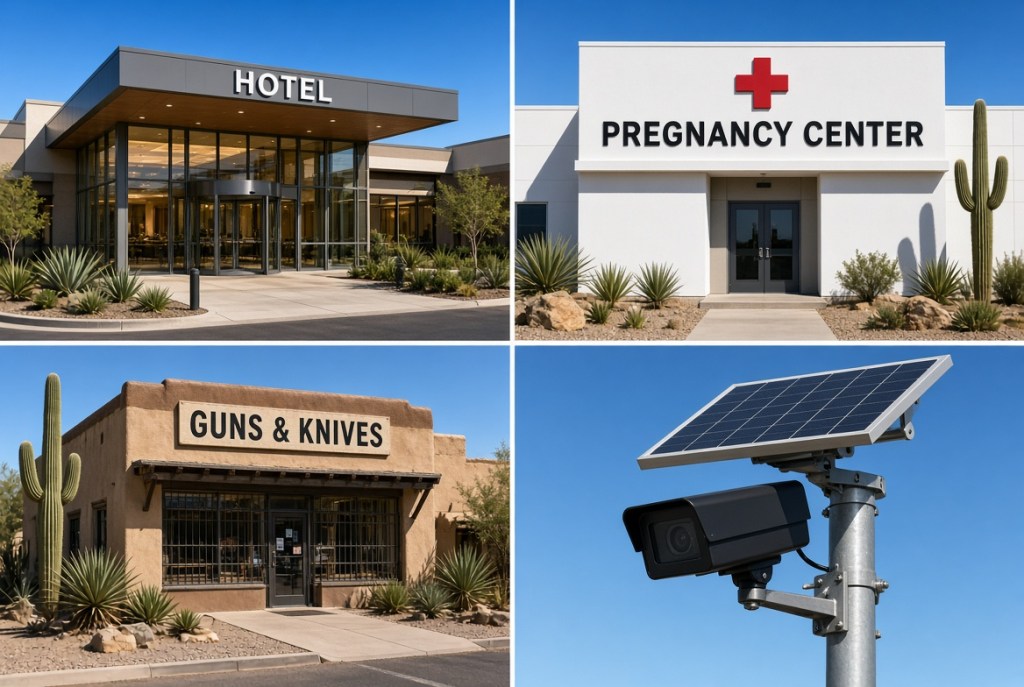
What this small cluster of cameras suggests about current Flock surveillance:
In just a few days of looking, Prescott Police Department Flock cameras turned up at:
- A gun & knife store
- A pregnancy center
- A downtown hotel whether the visit is for business or pleasure
These are ordinary commercial locations, but they are also places where many people would prefer that their visit not be automatically photographed, logged, and stored.
This pattern points to a few current realities of Flock and similar ALPR deployment:
Coverage is denser and more opportunistic than most people realize. Cameras are no longer limited to high-crime corridors or major highways. They are appearing at everyday intersections that happen to serve businesses people may not want recorded.
The system does not distinguish between public-safety targets and everyday legal activity. The same camera that might catch a stolen car also quietly logs visits to a gun shop, a pregnancy center, or a hotel.
Driveway-level surveillance is now routine. When cameras sit only 55–170 feet from business entrances, they effectively monitor who comes and goes from specific private businesses, not just general traffic flow.
The network effect is already in place. Even a handful of cameras creates a searchable record of movements between these locations. Add more across a city and the ability to reconstruct patterns of life grows quickly.
In the case of the pregnancy center, the city has indicated that the camera’s placement had nothing to do with the facility itself. That is probably true in terms of intent — the location was likely chosen for traffic patterns or existing infrastructure. Yet the practical result is the same: vehicles turning into the center are photographed and logged. This illustrates a common gap with ALPR systems. Departments often focus on the primary goal of public safety and may not fully map or weigh the secondary effects on sensitive locations.
One possible response is stronger civilian oversight. A review process that includes non-law-enforcement voices could help surface privacy and placement concerns earlier, require clearer justification for new cameras, and set firmer rules on data retention and use — without removing operational control from the police.
In short, the current state of Flock surveillance in places like Prescott is no longer limited to “watching the highways for bad guys.” It has become a general-purpose logging system that sits in front of ordinary—and sometimes sensitive—doors around town.
That is the quiet shift these three cameras illustrate.


Leave a Reply