Embry-Riddle talks a lot about safety. It never talks about plate readers.
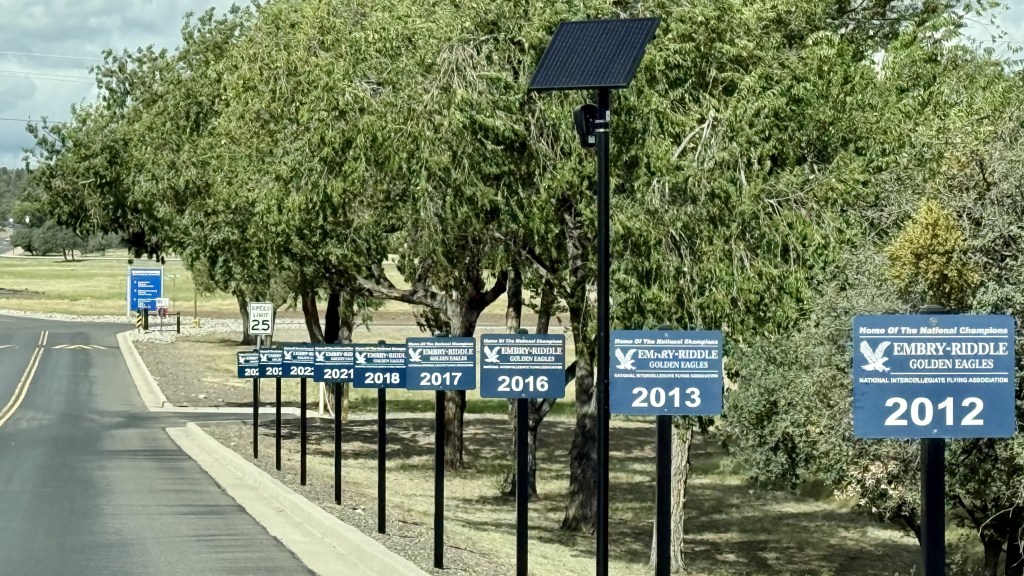
On Haas Boulevard, west of Willow Creek Road, a solar Flock pole stands in the row of Golden Eagles championship signs — 2012 nearest the curb, then 2013, 2016, 2017, 2018, and the rest leading toward campus. The signs face the road. So does the Flock camera. Every car that turns in past the 25-mph board is in the frame.
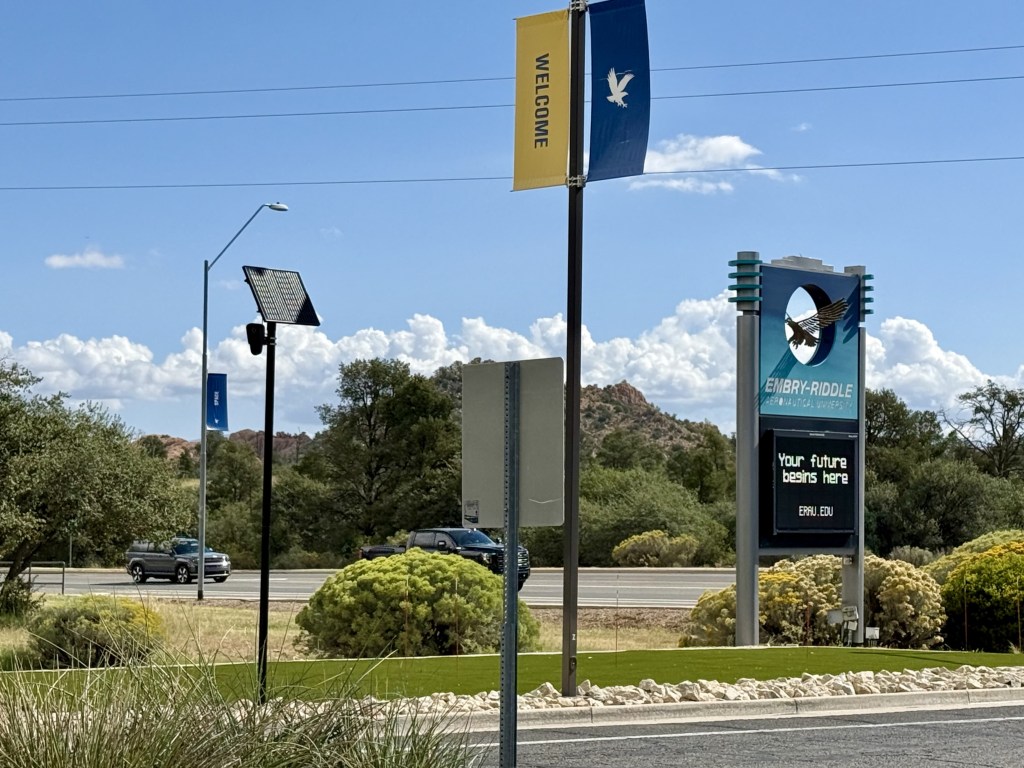
A second pole sits at the Dan Carrell Drive entrance, next to the monument sign that says, “Your future begins here.” Welcome banners hang over the driveway. The camera stands in the same landscape.
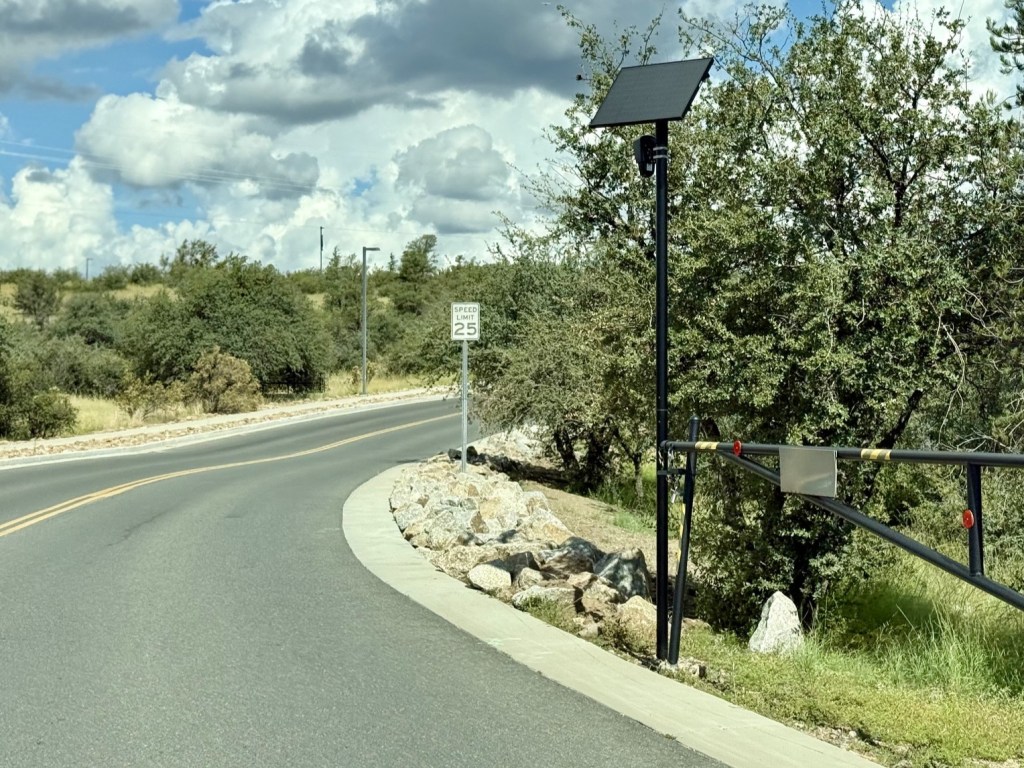
A third is on Rummel Road, immediately west of Willow Creek Road, on the curve by the 25-mph sign and the steel rail at the entrance.
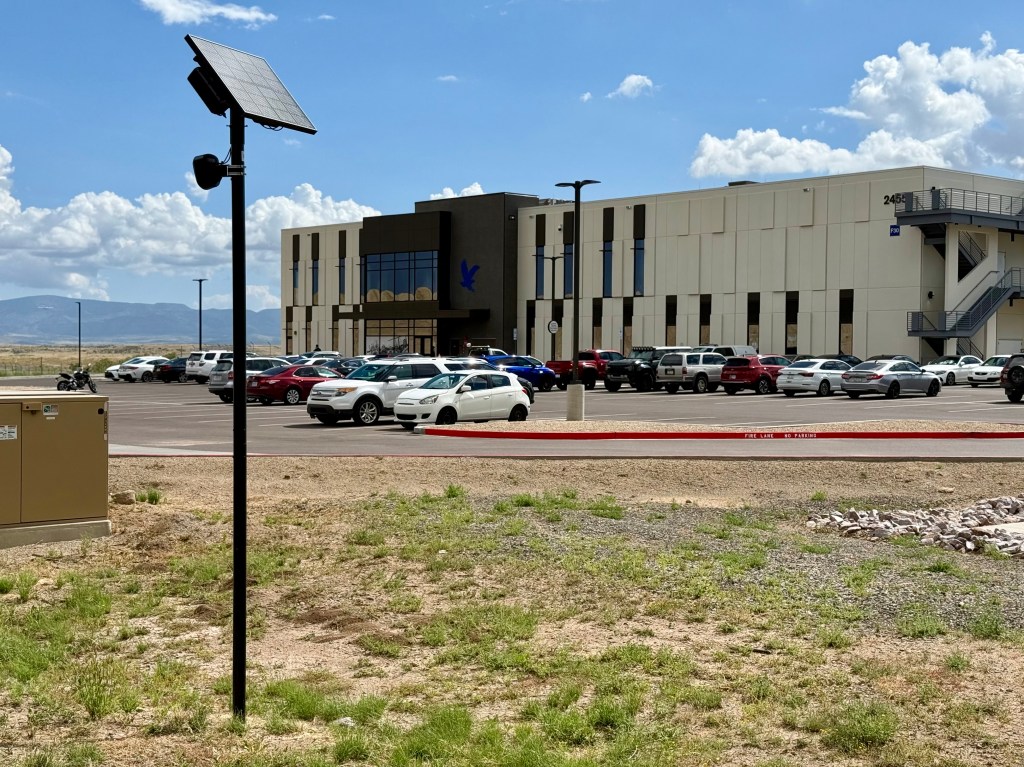
The fourth is on the south side of Ruger Road at the Flight Training Center / F30 building, 2455 Ruger Road. The camera faces along the road and catches cars at the parking lot entrance and exit. The road beyond the camera ends 360 feet at a locked airport gate.
Four poles. Same Flock kit: black mast, tilted panel, small camera head. One in the championship row. One at the official welcome. One just west of Willow Creek on Rummel. One at the flight-school driveway.
Embry-Riddle’s Prescott safety pages publish the usual package: officers around the clock, twenty-eight blue-light phones, night escorts, the Eagle Guardian app, Clery reports, a dispatch center that handles more than 12,000 calls a year. The copy reads like a brochure for a well-watched campus.
The same pages never mention automated license plate readers. They never mention Flock Safety. There is no FAQ about who can search for a plate, how long the image is stored, or whether a camera on Haas, Dan Carrell, Rummel, or Ruger feeds a network already used by Prescott Police.
That silence sits next to a city system that is not silent. Prescott’s Flock deployment is in public records and on sites like DeflockPrescott. The city’s own transparency portal lists dozens of readers and a 30-day default retention. None of that material names who owns or operates these four poles. None of Embry-Riddle’s safety information fills in the missing information.
Students get escorts, phones, and an app — and no official word on the Flock cameras. Pride in safety features is not the same as transparency about surveillance.
As of mid-September 2026, campus pressure helped push Flock off several other schools. That is not the same as campuses abandoning plate readers.
- UW–Madison — Students, staff assembly, and faculty pushed. Police did not renew Flock. The cameras were deactivated and slated for removal. The department said it still wants an ALPR vendor.
- UW–Milwaukee — Police ended Flock use, told the company to take the cameras down, and covered them in the meantime.
- Kent State — Ended a Flock pilot after campus feedback that the cameras made some people feel less safe.
- Emory — DeFlock Emory petitioned and protested. The student paper later reported the university did not renew the Flock contract.
- Stanford — Ended Flock and covered the cameras, then contracted a closed campus system (Genetec) that is not built as a shared agency network.
- University of Minnesota — Announced removal of at least one Flock camera after Cedar-Riverside / privacy outcry. The broader campus ALPR picture is less clear.
- UW–Oshkosh — Campus police suspended Flock use with other Winnebago County agencies after data-release concerns.
The pattern is consistent: when the cameras become visible, the institution has to say who owns them, who can search them, and whether the data leaves campus. Embry-Riddle has not said any of that. The poles are already up.
Embry-Riddle lists the escorts and the phones. It does not list the four Flock cameras. Until the university puts the cameras in the same voice it uses for Eagle Guardian, the missing information is the story.


Leave a Reply